
A father helps his daughter brush her teeth in a home bathroom setting, fostering good hygiene habits.
📚 Health Library🦷 Dental & Oral Health

Cracking the Code: Understanding and Caring for Cavitated Dental Caries

Discover how to protect your smile with holistic and professional care.

GoTo Telemed Medical Editorial TeamAI-assisted · Reviewed 2026-10-22
⏱ 16 min read📘 Reading level 7📚 18 references🏷️ Cavitated Dental Caries, Tooth Decay, Dental Abscess
Family hygiene routines foster healthy habits from a young age. Photo: RDNE Stock project / Pexels · Pexels License
☰ Contents
  1. Cracking the Code: Understanding Cavitated Dental Caries
  2. By the numbers
  3. The Journey from Healthy Tooth to Cavity
  4. Stages: from first change to advanced
  5. Exploring Cavitated Dental Caries: The Science Beneath the Surface
  6. Cavitated Dental Caries: Whole-Body Impact
  7. Recognizing Symptoms of Cavitated Dental Caries
  8. Quick self-check
  9. Causes of Cavitated Dental Caries
  10. Tests for Cavitated Dental Caries
  11. Caring for Cavitated Dental Caries
  12. Do’s and don’ts
  13. Food guide
  14. Your daily routine
  15. Preventing Cavitated Dental Caries
  16. Gallery
  17. Children, pregnancy, older adults and more
  18. Myths and facts
  19. Case studies: stories that teach
  20. Clinical pearls for providers
  21. When to Talk to a GoTo Telemed Practitioner
  22. Check what you learned
  23. Frequently asked questions
  24. Glossary
  25. Preserve Your Smile: Steps to Take Today
  26. References
⭐ Key takeaways
  • Cavities form when bacteria produce acids that erode enamel.
  • Early detection helps stop cavities from worsening.
  • Professional dental care is necessary for cavity repair.
  • Good oral hygiene helps prevent new cavities.
  • Reducing sugary foods supports dental health.
  • Traditional and modern treatments can complement each other.
01Overview

Cracking the Code: Understanding Cavitated Dental Caries

Imagine Emma, a middle school student, enjoying a sweet apple while chatting with her friends. Suddenly, she winces as a sharp pain shoots through her tooth. This could be a sign of cavitated dental caries, or a cavity.

Cavitated dental caries, or cavities, are holes in a tooth caused by tooth decay. This happens when bacteria in the mouth feed on sugars from our food, creating acids that wear away the tooth's hard outer layer, or enamel12.

Anyone can get cavities, but they are very common in both kids and adults. About About 90% of children experience tooth decay in their baby teeth, and around 1 in 4 adults worldwide have dental caries in permanent teeth32.

Cavities might seem like just a small annoyance, but they can lead to big problems. If not treated, they can cause pain, infections, and even tooth loss. Decay reaching the tooth's inner layers can cause serious pain and damage14.

This article explains how cavities develop, what effects they have inside our teeth, and how professional dental care, alongside holistic practices, can manage them. We'll also discuss preventive steps and why regular dental check-ups are crucial for keeping teeth healthy.

02By the numbers

By the numbers

1 in 4
Adults globally affected by dental caries

Around one-quarter of adults worldwide have dental caries.2

90%
Children with tooth decay

Approximately 90% of children will experience dental caries in their primary teeth.3

$30 billion
Annual cost of dental disease treatment in the US

Treating dental diseases, including cavities, costs about $30 billion each year in the United States.5

50%
Increased risk of caries with high sugar intake

Regular high sugar intake increases caries risk by 50%.4

3 times a day
Brushing reduces cavity risk

Brushing teeth three times a day significantly lowers the risk of cavities.6

25 out of every 100 — Adults globally affected by dental caries
03Inside the body

The Journey from Healthy Tooth to Cavity

Teeth are made up of several layers. The outermost layer, enamel, is like a tough shell protecting the more sensitive parts inside. Under the enamel is the dentin, which is slightly softer. The innermost part is the pulp, where the nerves and blood vessels live2.

When we eat sugary foods, bacteria in our mouth feast on these sugars. They produce acids as waste, which start to dissolve the enamel, like rust on metal. Over time, this leads to tiny openings and, eventually, a visible hole—this is a cavity1.

Once the protective enamel is breached, the decay reaches the softer dentin. This can cause increased sensitivity because dentin is full of tiny pathways leading to the pulp, where nerves reside. If decay continues, it can reach the pulp, causing significant pain and potentially an infection4.

Brushing and flossing can reduce harmful bacteria and acids. Regular dental visits help catch problems early, and professional treatments can repair or halt the decay before it worsens3.

🧫 What Happens Inside a Tooth

At the cellular level, enamel consists of tightly packed mineral crystals, mostly calcium and phosphate. These crystals keep the enamel strong and hard like a helmet2.

When acids from bacteria start working on the enamel, they dissolve the minerals. Imagine your helmet slowly turning into soft putty—it's no longer protective1.

If decay reaches the dentin layer, bacteria can navigate through small tubes and affect the sensitive pulp, leading to pain and possible infection4.

How it happens, step by step

  1. 1Stage One: Enamel AttackAcid produced by bacteria begins to dissolve minerals in the enamel.
  2. 2Stage Two: Dentin InvasionOnce the enamel is compromised, decay spreads into the softer dentin.
  3. 3Stage Three: Pulp ExposureDecay reaches the pulp, causing pain as nerves are exposed.
  4. 4Stage Four: Infection RiskBacteria can infect the pulp, possibly leading to an abscess (a painful, swollen area).
  5. 5Stage Five: Widespread DamageIf untreated, the damage could extend beyond the tooth, causing more severe problems.
Think of your tooth as a castle: the enamel is the sturdy wall guarding against invaders (bacteria). If the wall breaks, the invaders can rush in and cause harm.
04How it progresses

Stages: from first change to advanced

  1. Stage 1Reversible
    Early Demineralization

    Acid starts to break down the enamel surface, but no hole is visible yet.

    You may notice: No pain, sometimes white spots appear.

    ⏳ Weeks to months
  2. Stage 2Needs care
    Established Cavity

    A hole has formed in the enamel, reaching the dentin layer.

    You may notice: Tooth sensitivity to sweet, cold, or hot foods.

    ⏳ Weeks to months
  3. Stage 3Needs care
    Deep Decay

    Decay has reached the pulp, possibly causing infection and severe pain.

    You may notice: Throbbing pain, potential swelling.

    ⏳ Months
  4. Stage 4Needs care
    Abscess Formation

    Infection causes a pus-filled abscess near the tooth.

    You may notice: Extreme pain, swelling, fever.

    ⏳ Weeks to months
05Science deep-dive

Exploring Cavitated Dental Caries: The Science Beneath the Surface

Cavitated dental caries are more than simple holes. These cavities paint a complex picture of how living bacteria, acids, and sugars interact in your mouth. Understanding this helps us see why cavities form and how to prevent them.

Bacterial Activity

Bacteria in the mouth, especially Streptococcus mutans, feed on sugars from foods. They turn these sugars into acids, which can erode the tooth enamel, the hard outer shell of the tooth. Over time, this acid attack creates a cavity.

Enamel Breakdown

Enamel protects the softer parts of the tooth underneath. When acids repeatedly erode enamel, tiny holes start to form. This process weakens the tooth surface, eventually leading to a cavitated carie.

Dentine Exposure

Once enamel is breached, the underlying dentine is exposed. Dentine is softer and more porous than enamel, so it is more susceptible to decay. This exposure can lead to deeper cavities and possibly pain if not treated.

pH Imbalance

A balanced pH in the mouth supports healthy teeth. When the pH drops due to acid production, it creates an environment where bacteria thrive and further damage can occur.

Biofilm Formation

Plaque, a sticky film, forms when bacteria adhere to the tooth surface. This biofilm provides a constant acidic environment for further erosion of tooth structures, promoting carie progression.

What the latest research shows

2025Silver Diamine Fluoride Effectiveness

Silver diamine fluoride (SDF) with atraumatic restorative treatment can help stop caries progression. It’s a minimally invasive option that works to arrest decay effectively.7

2022Minimal Intervention Dentistry

This approach uses conservative treatments to manage cavities in primary teeth, favoring techniques that preserve tooth structure. It shows promise for less invasive dental care.8

2018Nonrestorative Treatment Guidelines

Guidelines suggest that nonrestorative treatments can be effective for both noncavitated and cavitated caries, offering evidence-based options for arresting dental decay.9

2021Complementary Medicines in Oral Health

Integrative approaches offer additional support in combating dental caries, although they complement rather than replace conventional treatments.10

🔭 Still being studied
  • The precise balance between dietary sugars and oral microbiome health is still being studied.
  • There's ongoing exploration into personalized dental treatments based on genetic factors.
  • Researchers are investigating new materials for even more effective and less invasive cavity treatments.
06Whole-body effects

Cavitated Dental Caries: Whole-Body Impact

Cavitated dental caries, or cavities, don't just affect teeth. They can impact other parts of the body and overall health. Let's explore how tooth decay in a single tooth can lead to broader health issues.

Oral Health

Cavities directly damage teeth, causing holes and sometimes leading to infections or abscesses. This weakens the tooth structure.

strong evidence
Digestive System

Cavity pain may hinder chewing, causing digestive issues from poorly chewed food.

moderate evidence
Immune System

Untreated infections from cavities can weaken the immune response and lead to further health problems.

moderate evidence
Cardiovascular System

Bacteria from oral infections can enter the bloodstream, potentially affecting the heart and blood vessels.

emerging evidence
Respiratory System

Oral bacteria may be inhaled into the lungs, which could lead to respiratory issues, especially in vulnerable populations.

emerging evidence
Mental Health

Chronic pain from cavities can lead to stress and anxiety, impacting mental well-being.

moderate evidence
07Know the signs

Recognizing Symptoms of Cavitated Dental Caries

Cavities can start small and grow without notice. Knowing the early and late signs can help you catch them before they cause major issues.

Early signs

  • Sensitivity to sweet, cold, or hot foods
  • White or dark spots on a tooth
  • Mild pain when biting down
  • Unusual taste in the mouth

Later signs

  • Visible holes or pits in teeth
  • Severe toothache
  • Swelling around a tooth
  • Bad breath that doesn't go away
🚨 Call 911 or get emergency care right away if you notice:
  • Sudden, severe toothache
  • Fever with swelling around the jaw
  • Difficulty opening your mouth
  • Swollen, painful gums
08Self-check

Quick self-check

Use these questions to see if you might be at risk for cavitated dental caries.

Tap what applies to you.

This check is not a diagnosis. A licensed GoTo Telemed practitioner can look at your situation with you.

09Why it happens

Causes of Cavitated Dental Caries

Cavities develop from a mix of factors. Learning these can help us prevent them.

Sugary Foods and Drinks Bacteria feed on sugars, producing acids that wear away enamel.

Poor Oral Hygiene Inadequate brushing and flossing allows plaque to build up and become acidic.

Dry Mouth Lack of saliva, which helps wash away food and acids, can increase decay risk.

Frequent Snacking Eating often gives bacteria more opportunities to produce harmful acids.

✅ Risks you can change

Reduce sugary snacksBrush and floss dailyUse fluoride productsStay hydratedVisit the dentist regularly

🧬 Risks you cannot change

AgePrevious dental historyGenetics
10Diagnosis

Tests for Cavitated Dental Caries

Identifying cavitated caries involves a mix of visual checks and tools. Here are common tests to expect.

1Dental X-rays
What it checks
Pictures of teeth using low-level radiation.
Why
Sees cavities hidden between teeth or under fillings.
What to expect
Quick, painless; bite on a small tab.
What results mean
Shows dark areas indicating decay.
2Visual Examination
What it checks
Dentist looks at teeth with mirror and light.
Why
Finds visible holes, dark spots, or uneven surfaces.
What to expect
Open wide; dentist uses tools to inspect.
What results mean
Identifies visible signs of decay.
3Cavity Explorer
What it checks
Special tool to check the hardness of tooth surfaces.
Why
Finds soft spots that may indicate decay.
What to expect
Slight pressure as tool touches teeth.
What results mean
Softness indicates decay; hardness is healthy.
11Care options

Caring for Cavitated Dental Caries

Taking action on cavitated caries can save your teeth from further damage. Here's how modern and traditional approaches care for your dental health.

🏥 Modern care

  • Dental Fillings Dentists remove decay and fill the cavity with materials like composite resin or amalgam. This restores strength and function to the tooth.
  • Crowns For severe decay, dentists might cover the tooth with a crown. Crown is a strong cap that replaces the damaged surface.
  • Root Canal Treatment If decay reaches the tooth's pulp, root canal treatment can save the tooth. Removes infected pulp, then seals the tooth to prevent further infection.
  • Tooth Extraction When a tooth is too damaged to repair, dentists may remove it. This is usually a last resort.
  • Silver Diamine Fluoride This topical treatment helps stop decay in its tracks. It can be a temporary measure to manage caries in children and adults7.

🌿 Traditional & integrative

  • Herbal Rinses Use natural ingredients like clove or tea tree oil in water as a mouth rinse. They may reduce bacteria but won’t heal cavities.
  • Ayurvedic Practices Oil pulling with certain oils may reduce bacteria but doesn't replace brushing.
  • Traditional Chinese Medicine Practices like acupuncture are thought to relieve pain and stress, supporting overall well-being. They are not direct cures for decay.

🏃 Everyday habits

  • Brush Regularly Brush your teeth at least twice a day with fluoride toothpaste. This removes plaque, the sticky film where bacteria thrive.
  • Floss Daily Flossing removes food particles and plaque between teeth, places where a toothbrush can't reach.
  • Healthy Eating Limit sugary snacks and drinks which feed harmful bacteria. Eat plenty of fruits, vegetables, and whole grains.
  • Regular Dental Visits Seeing a dentist twice a year helps catch problems early. Regular cleanings prevent plaque buildup.
  • Fluoride Use Use fluoride toothpaste and mouth rinse to strengthen your teeth and help prevent new cavities.
12Daily guide

Do’s and don’ts

✔ Do

  • Brush your teeth three times a day.
  • Use fluoride toothpaste.
  • Floss daily to remove plaque.
  • Limit sugary snacks and drinks.
  • Visit a dentist regularly for check-ups.
  • Rinse your mouth with water after meals.
  • Consider dental sealants to protect teeth.

✖ Don’t

  • Ignore tooth pain or sensitivity.
  • Consume sugary foods frequently.
  • Skip regular dental visits.
  • Use tobacco products.
  • Consume excessive acidic drinks.
  • Share toothbrushes.
  • Delay professional treatment for cavities.
13Food & drink

Food guide

Eating the right foods can help keep your teeth healthy and strong.

🥦 Choose more often

  • Dairy products Rich in calcium which strengthens tooth enamel.
  • Leafy greens Provide vitamins and minerals for overall health.
  • Nuts Contain nutrients that promote gum health.
  • Apples Help clean teeth and massage gums.

⚠️ Limit

  • Candies and sweets Sugary foods increase cavity risk.
  • Sodas High acidity can erode tooth enamel.
  • Juices Concentrated sugars contribute to decay.
  • Sticky foods Can cling to teeth and promote decay.
14A day that helps

Your daily routine

  1. Morning
    • Brush teeth with fluoride toothpaste.
    • Floss carefully.
    • Rinse mouth with water.
  2. Afternoon
    • Eat a tooth-friendly lunch.
    • Rinse mouth after eating.
  3. Evening
    • Brush teeth thoroughly before bed.
    • Use dental floss.
    • Consider a fluoride rinse.
15Prevention

Preventing Cavitated Dental Caries

Prevention is the first line of defense against cavities. Start these habits today for a brighter, healthier smile.

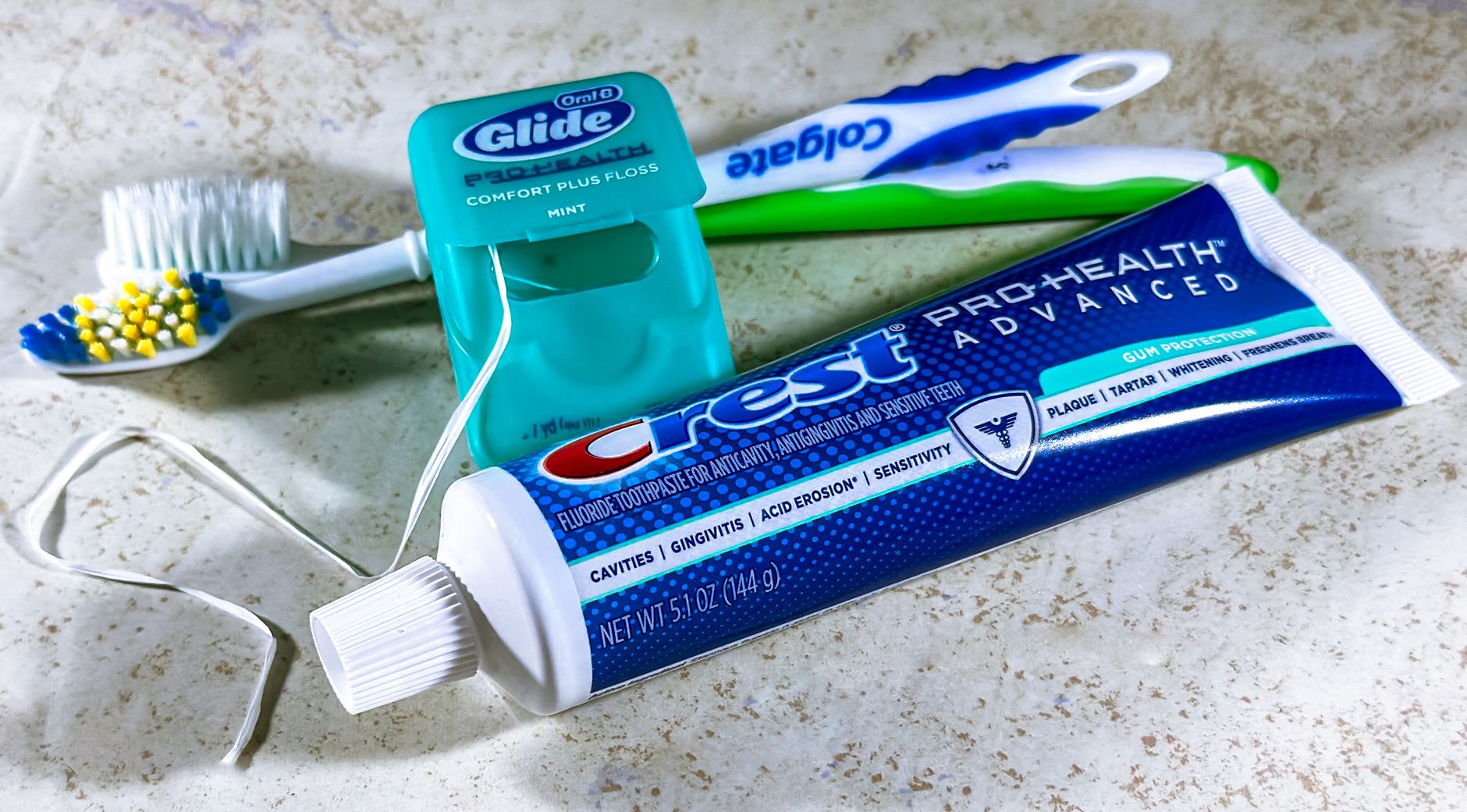
Close-up of dental care items including toothbrush, floss, and toothpaste for oral hygiene.
Essential tools for daily oral care to prevent dental caries.Photo: Terrance Barksdale / Pexels · Pexels License
1Regular Brushing

Brush with fluoride toothpaste at least twice daily. This habit helps remove plaque effectively.

2Flossing

Clean between your teeth with dental floss or an interdental cleaner. It reaches where a toothbrush can't.

3Limit Sugary Foods

Reduce intake of sweets and sugary drinks. Sugar feeds the bacteria that cause decay.

4Drink Water

Sip water throughout the day. It helps rinse away food particles and keeps saliva flowing.

5Routine Dental Check-ups

Visit a licensed GoTo Telemed practitioner every six months. Early detection can stop decay from worsening.

6Use Mouthwash

An antibacterial mouthwash helps reduce harmful bacteria. Choose one with fluoride for added protection.

7Sealants

Dental sealants are protective coatings applied to back teeth. They shield enamel from plaque and acids.

17Special groups

Children, pregnancy, older adults and more

Children

Children need a pea-sized amount of fluoride toothpaste. Promote brushing and healthy snacks.

Pregnancy

Maintain good oral hygiene and see a dentist regularly. Hormonal changes can affect gum health.

Older adults

Regular dental visits are crucial. Medications may affect oral health, so discuss them with a specialist.

People with diabetes

Good blood sugar control helps prevent gum disease. Prioritize oral hygiene and regular dental check-ups.

18Myths vs facts

Myths and facts

Myth

Cavities are only caused by sugar.

Fact

While sugar contributes, poor oral hygiene and bacteria are also key factors.

Myth

If my tooth doesn't hurt, it's healthy.

Fact

Cavities might not hurt until they're advanced. Regular checks detect early signs.

Myth

Fluoride is unsafe.

Fact

In proper amounts, fluoride strengthens teeth and helps prevent decay.

Myth

Only kids get cavities.

Fact

Cavities can develop at any age. Adults need to maintain good oral care, too.

19Case studies

Case studies: stories that teach

Simulated examples to help you understand — not real patients.

Simulated case

Silent Beginnings

Ella · 12 · California
“I didn't know small spots could mean cavities!”

Ella is a middle schooler who enjoys soccer and sweets.

Ella began feeling a twinge when eating ice cream. Her parents noticed white spots on her teeth but thought nothing of it. After a few weeks, she complained of sensitivity when biting into sweet foods. A dental visit revealed early cavities. Her family worked with GoTo Telemed to create a plan to manage her diet and improve oral hygiene.

  1. Week 1Ella felt sharp pain with cold foods.
  2. Week 3Sensitivity to sweets increased.
  3. Month 2Dental checkup showed early decay.
Signs
Sensitivity to sweets · White spots on teeth
Tests
Visual Examination · Dental X-rays
Findings
Early-stage cavities in the enamel, visible on X-rays.
Care
GoTo Telemed suggested brushing three times a day and fluoride toothpaste.
Outcome
Ella's symptoms improved, and her cavities didn't worsen.
💡 Early detection and care can stop progression.

Simulated case

An Unseen Problem

James · 45 · Texas
“I realized how important regular checkups are after this.”

James works in tech and often skips dental visits.

James experienced mild tooth pain but ignored it. During a regular health checkup with GoTo Telemed, he mentioned the discomfort. A virtual consultation suggested a dental visit for X-rays. The X-rays showed that cavities had formed and needed immediate attention.

  1. Month 1James noticed mild tooth pain.
  2. Month 2Pain persisted but was ignored.
  3. Month 3Telemed consultation suggested dental check.
  4. Month 4Dental X-rays confirmed cavities.
Signs
Mild tooth pain · Unusual taste
Tests
Dental X-rays · Visual Examination
Findings
Cavities reaching the dentin layer.
Care
James followed GoTo Telemed's advice for fillings and improved oral care routine.
Outcome
Dental fillings resolved his pain, and oral hygiene improved overall health.
💡 Ignoring small pains can lead to bigger problems.
Simulated case

A Dual Approach

Mei · 55 · New York
“Finding harmony in treatments makes my teeth and mind feel better.”

Mei follows traditional practices and embraces modern medicine.

Mei felt discomfort while eating and sought advice from GoTo Telemed. They suggested a dental exam, which revealed cavitated caries. Mei combined the dentist's treatment plan with herbal rinses she trusted.

  1. Week 1Discomfort eating sweets.
  2. Week 2Visited a dentist.
  3. Month 1Decided on treatment combining modern and traditional methods.
Signs
Toothache · Swelling around tooth
Tests
Cavity Explorer · Dental X-rays
Findings
Cavitated caries reaching the inner layers of a tooth.
Care
Combined fillings with herbal rinses and continued regular cleanings.
Outcome
Pain relief and improved balance in oral health care.
💡 Combining traditional and modern care can be effective.
Simulated case

A Wake-Up Call

Jack · 68 · Florida
“That pain was my wake-up call; I won't ignore dental health again!”

Jack loves gardening and strong coffee.

Jack felt sudden, severe pain and swelling around his jaw. Emergency care identified an abscess from untreated decay. The GoTo Telemed team coordinated care with his dentist. After a root canal, Jack was pain-free and committed to better oral health habits.

  1. Day 1Severe pain and swelling.
  2. Day 1Emergency dental visit revealed abscess.
  3. Week 1Root canal treatment performed.
  4. Month 1Focused on better oral health habits.
Signs
Severe toothache · Swelling · Fever
Tests
Dental X-rays · Visual Examination
Findings
Abscess from deep decay, requiring root canal.
Care
Emergency treatment followed by ongoing oral hygiene support.
Outcome
Pain resolved, and Jack adopted regular dental visits.
💡 Emergency situations require immediate care and prevention strategies.
20For clinicians

Clinical pearls for providers

  • Regularly screen for early signs of caries during dental check-ups to prevent progression.
  • Look for signs of advanced decay such as tooth pain or visible holes; these require prompt attention.
  • Educate patients on the importance of oral hygiene and routine dental visits for prevention.
  • Discuss the role of dietary sugars in caries development and recommend reducing sugar intake.
  • Inform about the benefits of fluoride treatments for strengthening enamel and preventing cavities.
  • Advocate for dental sealants in children to shield grooves where cavities begin.
21Get care

When to Talk to a GoTo Telemed Practitioner

Oral health is vital for overall well-being. Concerned about decay? Connect for guidance. A licensed GoTo Telemed dental specialist can help identify issues, provide tailored advice, and recommend treatments to restore your dental health.

  • Severe toothache that doesn’t go away
  • Swelling around the mouth or face
  • Difficulty chewing or opening your mouth
  • Persistent bad breath not improved by brushing
  • Bleeding or swollen gums
22Quiz

Check what you learned

1. What is a cavitated dental caries?

A cavitated caries means there's a hole formed in the tooth.

Show the answer

A hole in a tooth — A cavitated caries means there's a hole formed in the tooth.

2. What causes cavities?

Bacteria feed on sugars and make acids, causing cavities.

Show the answer

Bacteria breaking down sugars — Bacteria feed on sugars and make acids, causing cavities.

3. How can cavities be prevented?

Good oral hygiene like brushing and flossing helps prevent cavities.

Show the answer

Brushing and flossing — Good oral hygiene like brushing and flossing helps prevent cavities.

4. What symptoms might suggest a cavity?

Sensitivity to cold, hot, or sweet foods can indicate a cavity.

Show the answer

Tooth sensitivity — Sensitivity to cold, hot, or sweet foods can indicate a cavity.

5. What does a dental filling do?

Fillings repair cavities by restoring the tooth's shape and function.

Show the answer

Repairs a cavity — Fillings repair cavities by restoring the tooth's shape and function.

23Questions

Frequently asked questions

What causes cavities?

Cavities occur when bacteria in the mouth break down sugars and produce acids that erode tooth enamel.

How can I prevent cavities?

Brush twice daily, floss, limit sugary foods, and visit the dentist regularly to prevent cavities.

Can cavities heal on their own?

Once a cavity forms, it won’t heal by itself. Professional treatment restores the tooth.

What treatments are available for cavities?

Treatments include fillings, crowns, or root canal therapy, depending on cavity severity.

How do I know if I have a cavity?

Symptoms include tooth sensitivity, visible holes, or mild pain. A dentist can confirm with exams.

What role does diet play in dental health?

A balanced diet low in sugar supports dental health and helps prevent cavities.

Are home remedies effective for cavities?

Home remedies may support oral care but don't replace professional cavity treatment.

Why are dental X-rays necessary?

Dental X-rays reveal cavities that are not visible during a routine exam.

Can cavities cause other health issues?

Untreated cavities can lead to infections, abscesses, and even affect overall health.

Is fluoride important in preventing cavities?

Yes, fluoride strengthens enamel and helps prevent cavities.

24Words to know

Glossary

Cavitated Dental Caries
A stage of tooth decay where a hole forms in the tooth.
Enamel
The hard outer surface layer of the tooth, protecting against decay.
Dentin
The layer beneath the enamel that supports the tooth structure.
Pulp
The innermost part of a tooth, containing nerves and blood vessels.
Plaque
A sticky film of bacteria that forms on teeth.
Abscess
A pus-filled infection near a tooth, leading to severe pain.
Fluoride
A mineral that strengthens teeth and helps prevent cavities.
Dental Filling
A material used by dentists to repair a cavity.
Root Canal Treatment
A procedure to remove infected pulp and save a tooth.
X-rays
An imaging technique to view inside the body's structures, like teeth.
Herbal Rinse
A mouthwash made from natural ingredients thought to reduce bacteria.
Oil Pulling
An Ayurvedic practice involving swishing oil to improve oral health.
Composite Resin
A tooth-colored material used for fillings.
Crown
A cap placed over a damaged tooth to restore its shape and function.
25The bottom line

Preserve Your Smile: Steps to Take Today

Cavitated dental caries are more than just small holes in teeth. They're a call to action for better oral care. Understanding this condition empowers you to make changes that benefit your smile and health.

Start by improving oral hygiene at home. Brush, floss, and make smart dietary choices. Regular dental visits catch problems early and prevent new issues from arising.

Embrace a combination of traditional and modern approaches for a comprehensive care plan. Take positive steps now, and you'll protect your dental health for years to come.

26Sources

References

  1. Dental Caries (Tooth Decay) Centers for Disease Control and PreventionWeb
  2. Dental Caries Fact Sheet World Health OrganizationWeb
  3. Cavity Prevention Tips Mayo ClinicWeb
  4. The Impact of Dietary Choices on Oral Health Cleveland ClinicWeb
  5. Understanding Cavities American Dental AssociationWeb
  6. Natural Remedies for Cavity Prevention National Center for Complementary and Integrative HealthWeb
  7. Effectiveness of silver diamine fluoride application with atraumatic restorative treatment in arresting the progression of dental caries in children and adults: a systematic review and meta-analysis JBI evidence synthesis (2025)PubMed 40458007
  8. Minimal intervention dentistry for managing carious lesions into dentine in primary teeth: an umbrella review European archives of paediatric dentistry : official journal of the European Academy of Paediatric Dentistry (2022)PubMed 34784027
  9. Evidence-based clinical practice guideline on nonrestorative treatments for carious lesions: A report from the American Dental Association Journal of the American Dental Association (1939) (2018)PubMed 30261951
  10. Complementary and Alternative Medicines in Oral Health Care: An Integrative Review Journal of pharmacy & bioallied sciences (2021)PubMed 35017893
  11. Importance of pH Balance in Oral Health Harvard School of Dental MedicineWeb
  12. Herbal Approaches in Oral Care Journal of Traditional Chinese MedicineWeb
  13. Minimal Intervention Dentistry: Current Practice and the Future British Dental JournalWeb
  14. Selection criteria for immediate implant placement and immediate loading for single tooth replacement in the maxillary esthetic zone: A systematic review and meta-analysis Clinical oral implants research (2023)PubMed 37750515
  15. Outcome of primary root canal treatment: systematic review of the literature -- Part 2. Influence of clinical factors International endodontic journal (2008)PubMed 17931388
  16. Examiner training and reliability in two randomized clinical trials of adult dental caries Journal of public health dentistry (2011)PubMed 22320292
  17. (2024)PubMed 39571053
  18. Oral and dental care before radiotherapy: Guidelines and development of a time-bound protocol Indian journal of cancer (2022)PubMed 35946182

This article is general health education written with AI assistance and reviewed by the GoTo Telemed editorial team. It is not a diagnosis or a treatment plan. Case studies are simulated examples, not real patients. For advice about your own health, talk to a licensed GoTo Telemed practitioner. In an emergency call 911.

Scroll to Top